
The Outlier Investor's Blind Spot
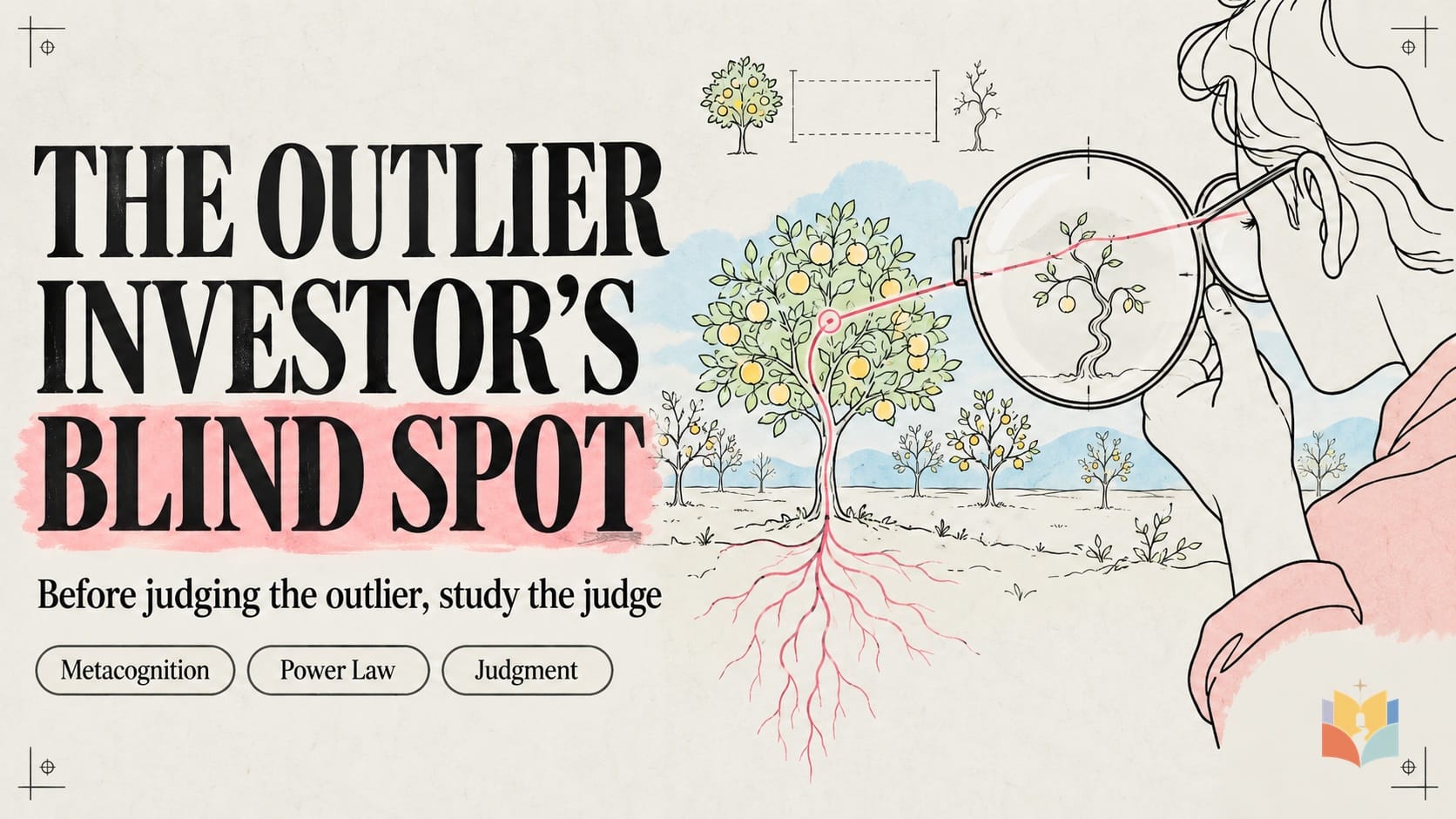
A foggy orchard reveals how position, skewed outcomes, timing, and luck distort high-uncertainty decisions.
Chinese version: 中文版
You meet a founder and something feels right. Minutes later, every new detail has a job: good news proves genius, bad news proves courage, and a contradiction proves complexity. Your reasoning sounds careful. The verdict, however, arrived first.
That sequence is the deepest subject of Outlier Investor, Leo Wang's book about judgment under radical uncertainty. The setting is angel investing, but the central problem is wider: how do you assess a changing person or system when the evidence is thin, the outcomes are extreme, and your own mind keeps pretending uncertainty has disappeared?
This is an educational discussion of a mental model, not investment advice or a recommendation to buy private securities. Early-stage companies can fail completely, private shares may remain illiquid for years, and a few visible winners can hide many losses. The U.S. Securities and Exchange Commission's investor bulletin on private placements explains why investors must be able to withstand a total loss and a long holding period.
The foggy orchard
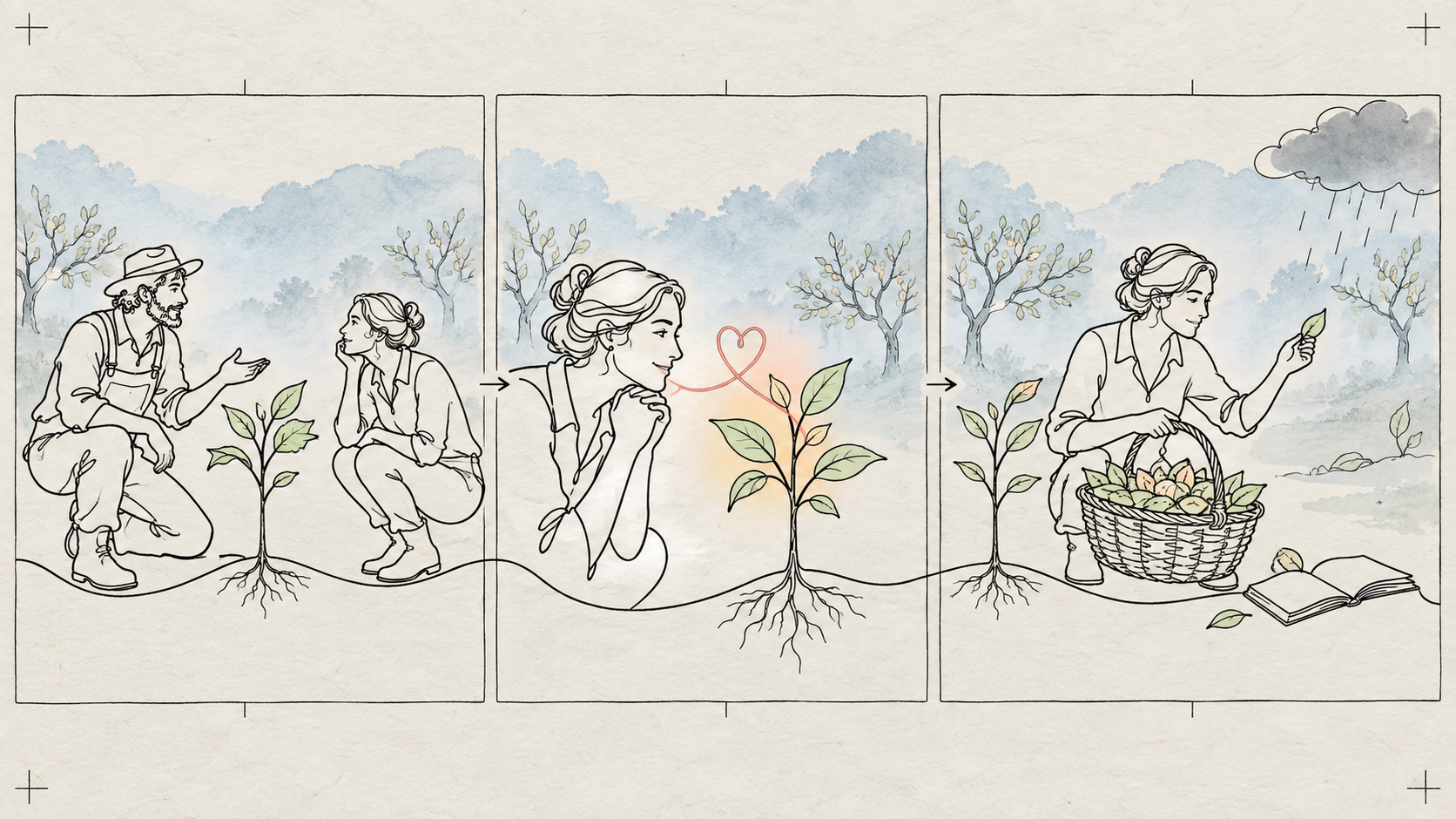
Imagine entering an orchard before sunrise. Hundreds of young trees stand in fog. Most look ordinary. A few bend away from the neat rows. You must judge which saplings might become enormous, but you cannot wait twenty years to inspect the result. You have to act while the orchard is still dark.
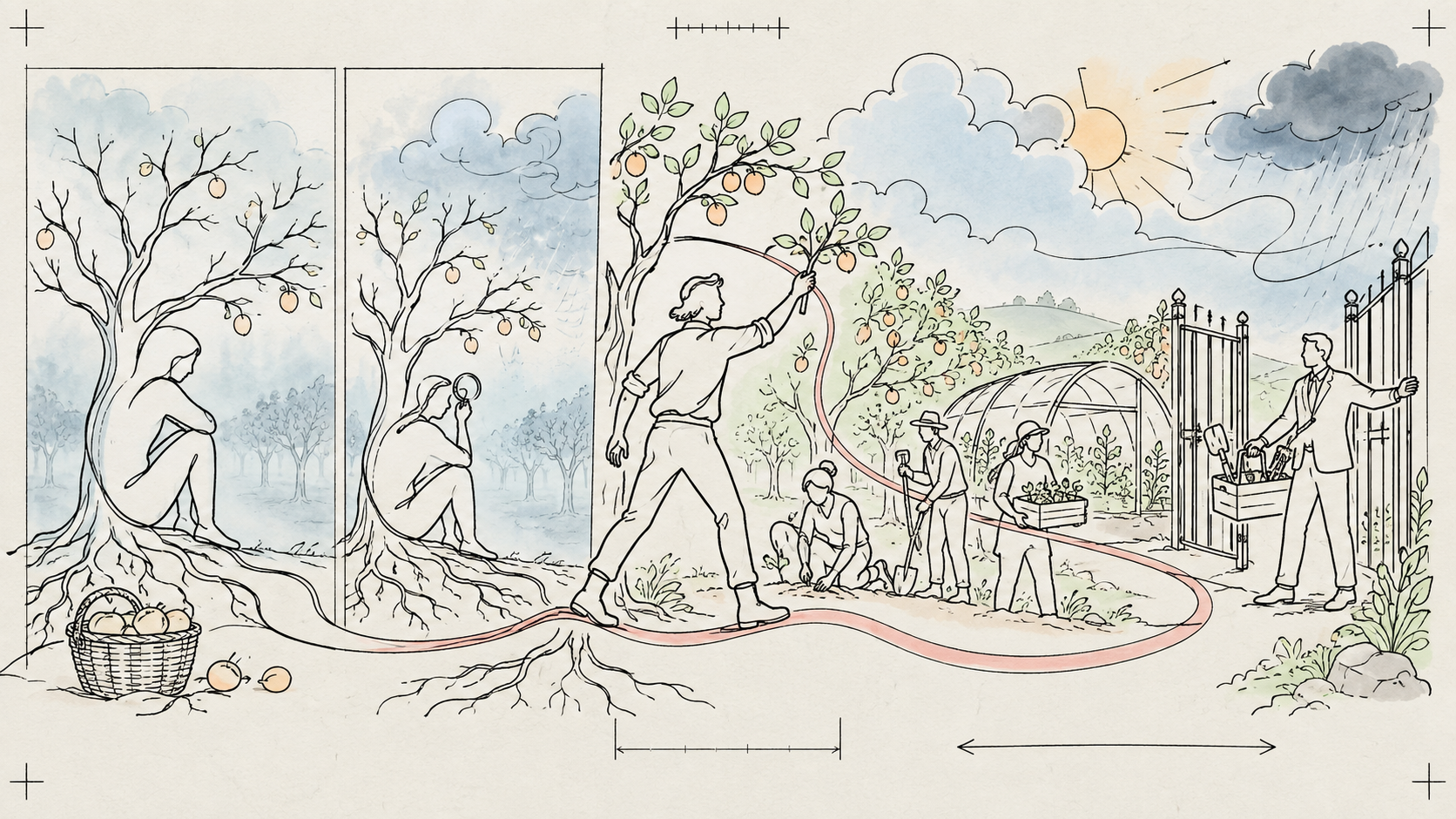
The popular fantasy says that a gifted investor can inspect every leaf, identify the future giant, and make one perfect selection. The better picture is less flattering. You are judging living systems in changing weather while wearing glasses that distort what you see. The fog is uncertainty. The weather is timing. The soil is the market. The roots are a founder's capacity to learn. The basket is a portfolio. The glasses are your position, incentives, memories, desires, and fear of missing out.
The analogy has a boundary. Founders are not passive trees. They choose markets, alter products, recruit people, persuade customers, and sometimes change the weather around them. Investors also change a company's options through access, advice, pressure, and follow-on support. The orchard corrects the fantasy of perfect selection; it should not erase human agency.
First blind spot: your position owns the story
The book begins with a provocative framework: position determines thinking. Once you become a shareholder, employee, customer, fan, or critic, evidence no longer lands on neutral ground. It enters a story that already has an owner. That is an interpretive claim from the book, not a universal law with a precise percentage attached to it.
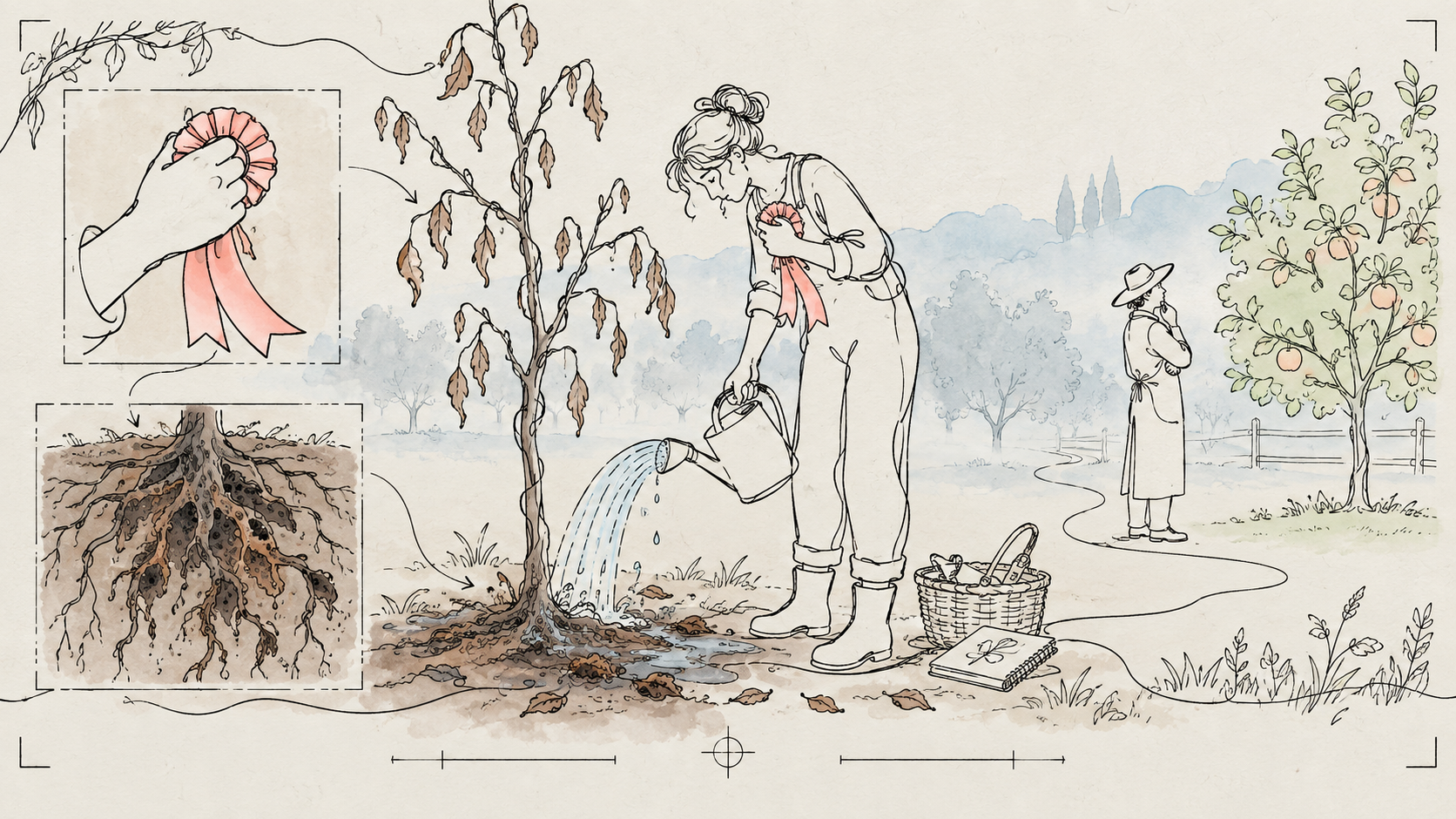
Suppose you invested in one tree last season and its leaves are now brown. If it belonged to a stranger, you might ask whether the roots are diseased. But this one is yours. You chose it and told others it was special. More water now feels like loyalty; cutting it down feels like admitting that your earlier self was wrong. In finance this resembles the sunk-cost effect studied by Hal Arkes and Catherine Blumer: past expenditure influences a present choice even though it cannot be recovered.
Metacognition creates a little distance. It means monitoring and reflecting on your own thinking, an idea classically developed in John Flavell's work on metacognitive monitoring. Instead of asking only, “Is this project good?”, ask: “What role am I protecting? What evidence would I notice if I had never seen this project before? What would change my mind?” A belief with no possible disconfirming evidence is not a decision rule. It is a loyalty oath.
Second blind spot: one tree can dominate the orchard
Startup outcomes are not shaped like a tidy hill with most results close to the average. They can be highly skewed: many investments lose money or produce modest results while a small minority account for a large share of total returns. People often call this pattern heavy-tailed or power-law-like. The exact mathematics depends on the dataset and definition, so the useful lesson is the shape, not a magic percentage.
A widely cited study of U.S. ventures first receiving early-stage financing from 1985 through 2009 found that 55 percent were terminated at a loss. Six percent returned more than five times the original investment and accounted for roughly half of gross returns. The authors use this distribution to describe entrepreneurship as experimentation; see Kerr, Nanda, and Rhodes-Kropf's NBER paper. The scope matters: this is evidence from a specific venture-capital sample, not a law covering every startup or angel portfolio.
Measuring private-market returns is also unusually difficult. Successful exits are more visible than failures, valuations are not continuous market prices, and investments resolve over different horizons. Korteweg and Nagel and John Cochrane analyze those selection and measurement problems. That is why a dramatic survivor story should never be mistaken for a complete base rate.
Skew changes the question from “How do I avoid every failure?” to “Could a success be large enough to matter, and can I survive long enough to encounter it?” It does not justify random betting. Expected value requires considering the probability and payoff of all meaningful outcomes. Even a positive expected value can be unusable if one failure destroys your ability to continue. A mathematical opportunity and a survivable strategy are not the same thing.
Third blind spot: weather can look like seed quality
People are visible, so founder stories are easy to tell. Timing is harder to see. A capable team entering before the necessary infrastructure, regulation, cost structure, or customer behavior exists may spend its resources educating a market. The same idea can look obvious after those surrounding conditions change. Pulling harder on a branch does not make spring arrive.
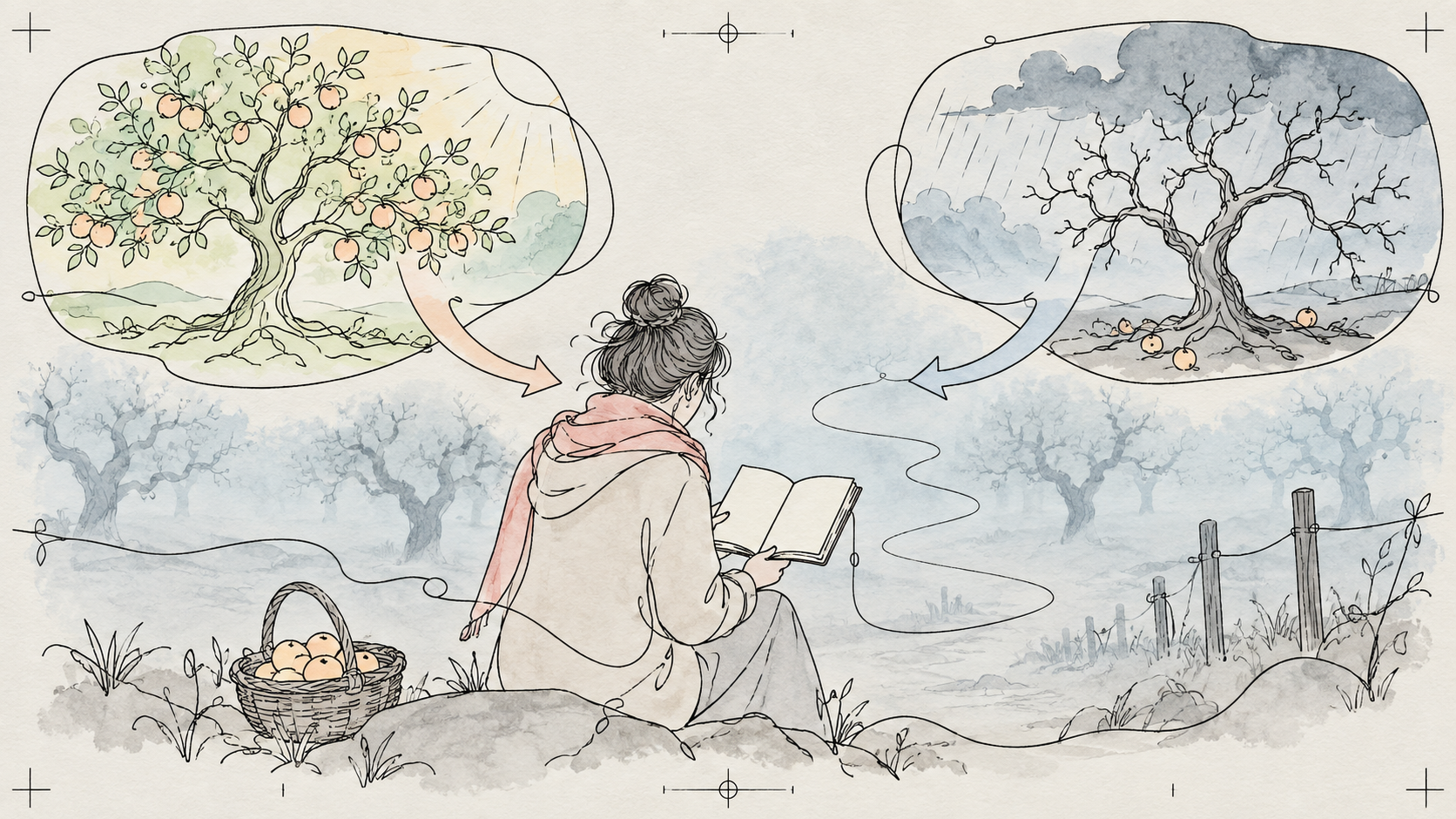
Early luck can then improve later access. A visible win attracts founders, partners, information, and capital, creating better future opportunities. Research on venture firms found that initial success predicted later performance partly through improved deal flow, even though the ability to choose the right places and times did not remain perfectly consistent. The argument and its limits appear in Nanda, Samila, and Sorenson's study of initial success. In orchard terms, the person who happens to find an early giant gets invited into better gardens.
Fourth blind spot: eccentricity is not adaptation
An outlier is not simply someone eccentric, rebellious, or impressive in a meeting. Difference is cheap. A valuable exception combines a nonstandard path with evidence of compounding learning: faster correction, sharper questions, recruited talent, repaired mistakes, and decisions that improve as the environment changes. Every field also contains people who perform unconventionality, reject advice, and call every objection proof of vision.
The difficult balance is openness without romance. Too much conformity selects only neat trees that everyone already understands. Too much fascination with outsiders mistakes damage for hidden strength. Intuition alone is insufficient, but a spreadsheet alone cannot make thin evidence thick. What helps is an explicit process that can be inspected after the outcome.
A four-question decision card
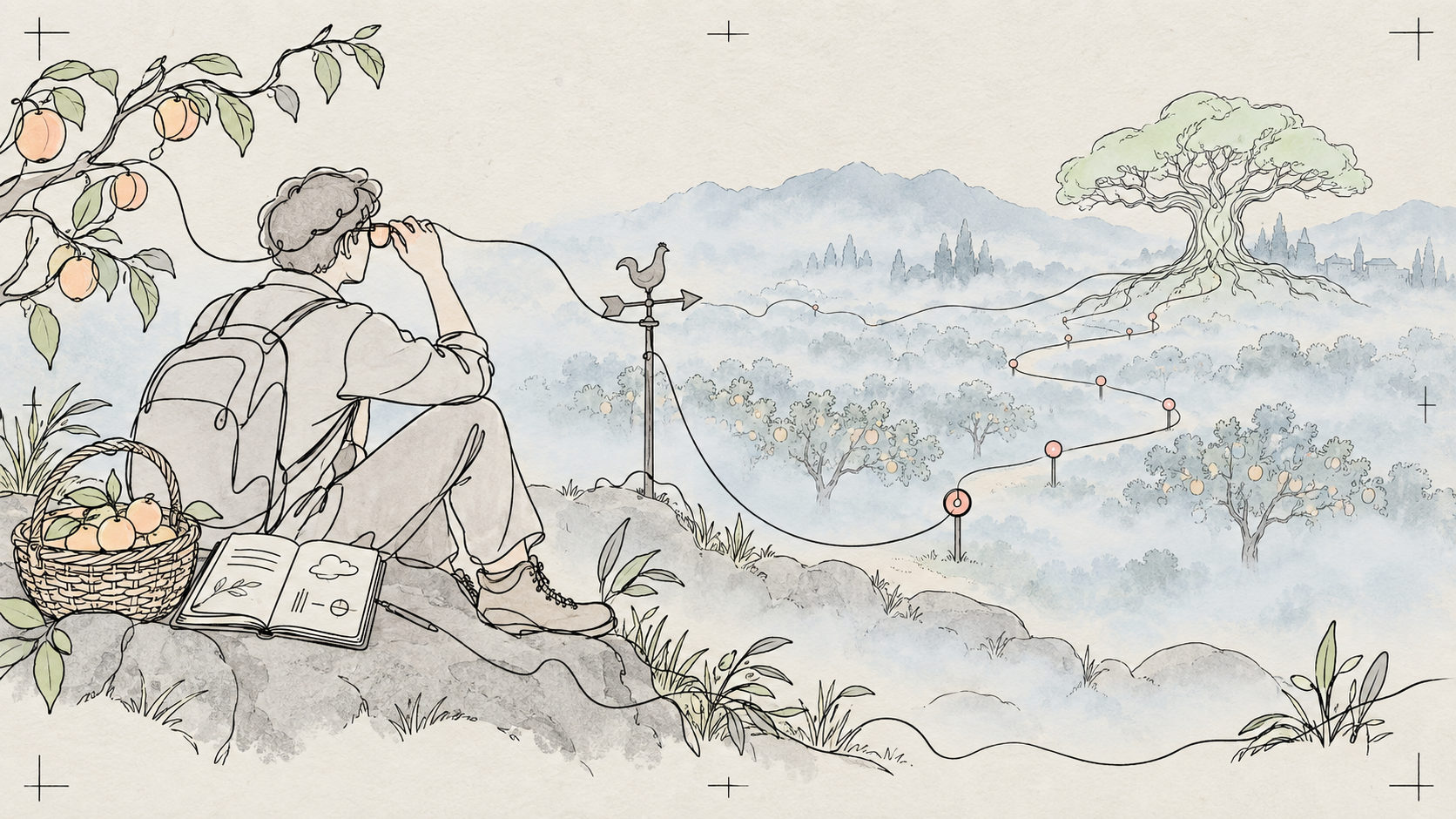
Write down what you believed before the outcome. Record why the timing looked favorable, what the team seemed able to learn, which signals would count against the thesis, how much uncertainty you accepted, and what would make you stop. A decision journal does not cure bias, but it helps preserve your earlier reasoning so that hindsight has less freedom to rewrite it. Baruch Fischhoff's foundational study of hindsight bias shows how knowing an outcome changes judgments of what seemed predictable.
For any high-uncertainty decision, try four questions:
1. What position am I already in?
2. What kind of distribution am I facing: a world of averages, or one where a few outcomes dominate?
3. What is seed and what is weather: which factors belong to the person or product, and which belong to timing and environment?
4. What evidence would make me update, stop, or admit that luck rather than skill explains the result?
The card does not remove uncertainty. It removes the pretense that uncertainty has been removed. A careful decision can end badly because uncertainty is real; a careless decision can end well because luck is real. If you reward only outcomes, luck can train you into worse judgment.
The durable picture is an investor in a foggy orchard, looking at living systems through imperfect glasses. The task is not to see the future with supernatural clarity. It is to design a way of observing, choosing, surviving, and updating that remains honest when one strange tree changes the whole landscape. Where has a past decision quietly taken ownership of your present reasoning?
Watch more first-principles field guides on Wiki4What, or read the essays at blog.wiki4what.com.