
Let Go Without Giving Up
A modern reading of non-abiding distinguishes responsibility from the demand that each outcome prove who you are. Through the cup-and-grip metaphor, Leo Wang introduces the Diamond Sutra themes develo...

Chinese version: 中文版
A revision request arrives. You need to improve the work. Yet a second job appears beside it: defend the person who was supposed to be good at this. By evening, the document has become a referendum on your worth. How do you release that second job while still completing the first?
This is the question behind the episode and my book Wuzhu, a modern reading of the Diamond Sutra. The Chinese title names an idea often rendered as non-abiding. The book is available in simplified and traditional Chinese only. This English companion introduces its argument; it does not announce an English edition.
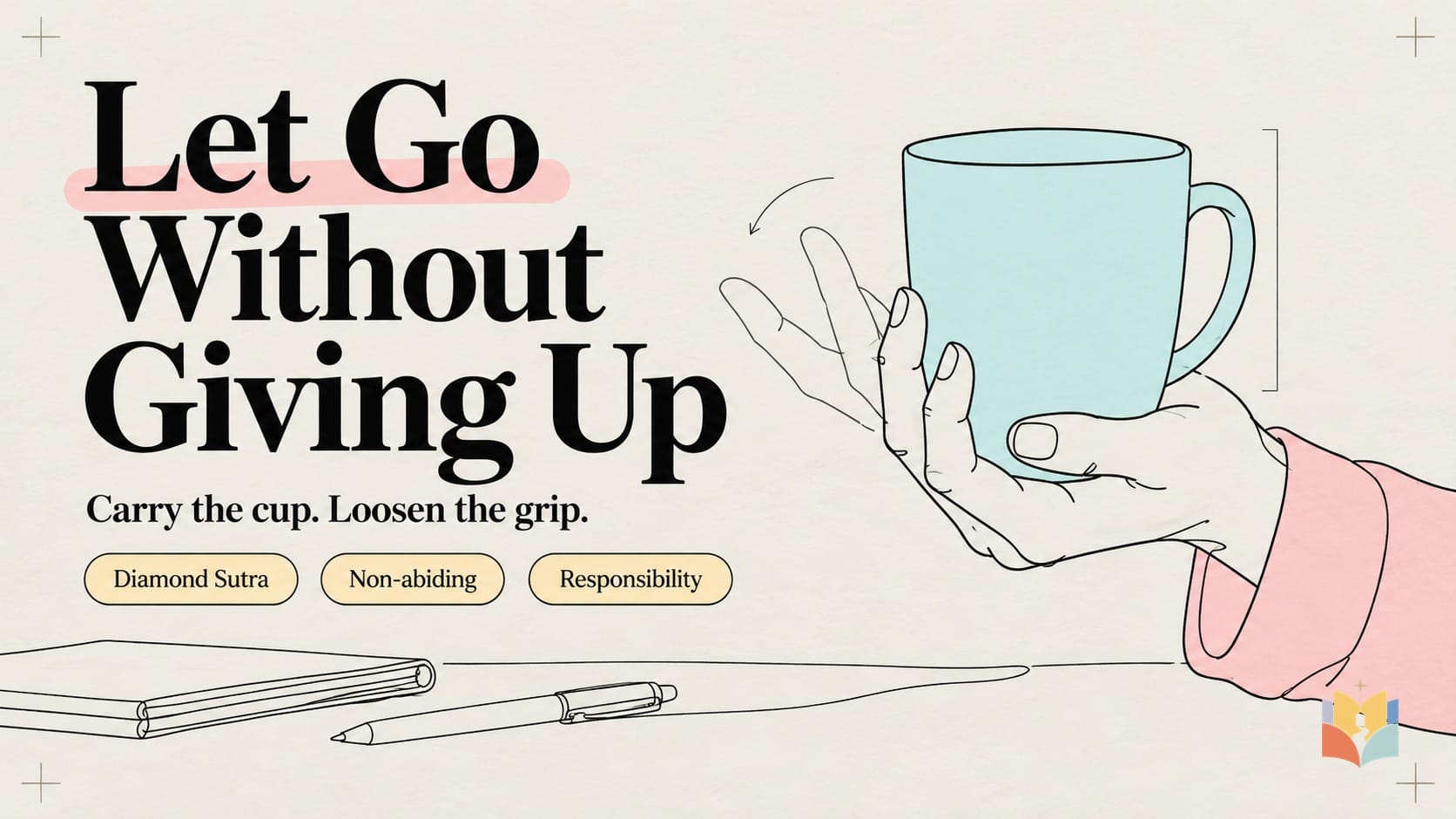
Carry the cup, loosen the grip
Imagine carrying a cup across a room. The cup needs support. But squeezing until your knuckles turn white adds pressure without adding responsibility. In our model, the cup is a real task, relationship, or promise. The functional grip is the attention it needs. The white knuckles are the demand that its outcome must confirm who you are.
The book's modern reading of non-abiding is to loosen that extra pressure while continuing to act. This metaphor has a boundary: Buddhist liberation is not an optimal-grip technique. The sutra also questions the fixed self we imagine doing the carrying. The cup is an aid to understanding one distinction, not a substitute for the teaching.

The scripture opens with food, a robe and bowl, washing feet, and sitting down. Subhuti then asks how people aspiring to awakening should settle and govern their minds. This is a scene within the scripture, not a modern eyewitness report. My book reads its ordinary setting as a clue: the inquiry belongs among actions that still need doing.
Giving without an invisible invoice
The text places the bodhisattva's commitment to liberate all beings beside a denial of beings to be grasped as having been liberated. My reading emphasizes a distinction between the commitment and the permanent benefactor we build around it. People and their needs do not disappear.
Consider staying late to help a friend finish a project. You review the files and give useful feedback. Later, you check whether they thanked you warmly enough. Someone praises the project without mentioning you. An invisible invoice appears: this event was supposed to certify that you are the helpful person.
Practical accounting remains useful. Record expenses, follow up on promises, and check whether the assistance worked. The separate question is whether another person's reaction must secure your identity. Releasing that demand is different from refusing to care about the result.

Emptiness is not disappearance
In the book's Buddhist framework, emptiness means the absence of an independent, fixed essence. It does not cancel existence or consequences. A cup depends on materials, shaping, use, and recognition. It holds water; if it breaks, there is still a mess to address.
An identity such as reliable works in a similar way as an everyday illustration. It names real patterns of keeping commitments. It does not establish an unchanging reliable substance inside you. If you miss a deadline, you can investigate the failure and repair it. You do not have to turn that event into proof that your entire existence is fraudulent.
The book uses appearances, or marks, as a way to examine experience hardened into fixed entities. That is the author's interpretive aid, not a complete definition of every Buddhist use of the term. The sutra's notions of a self, a person, a being, and a life are likewise arranged in the book into a modern account of identity. This arrangement is not four brain systems discovered by science.
Acknowledge, loosen, continue
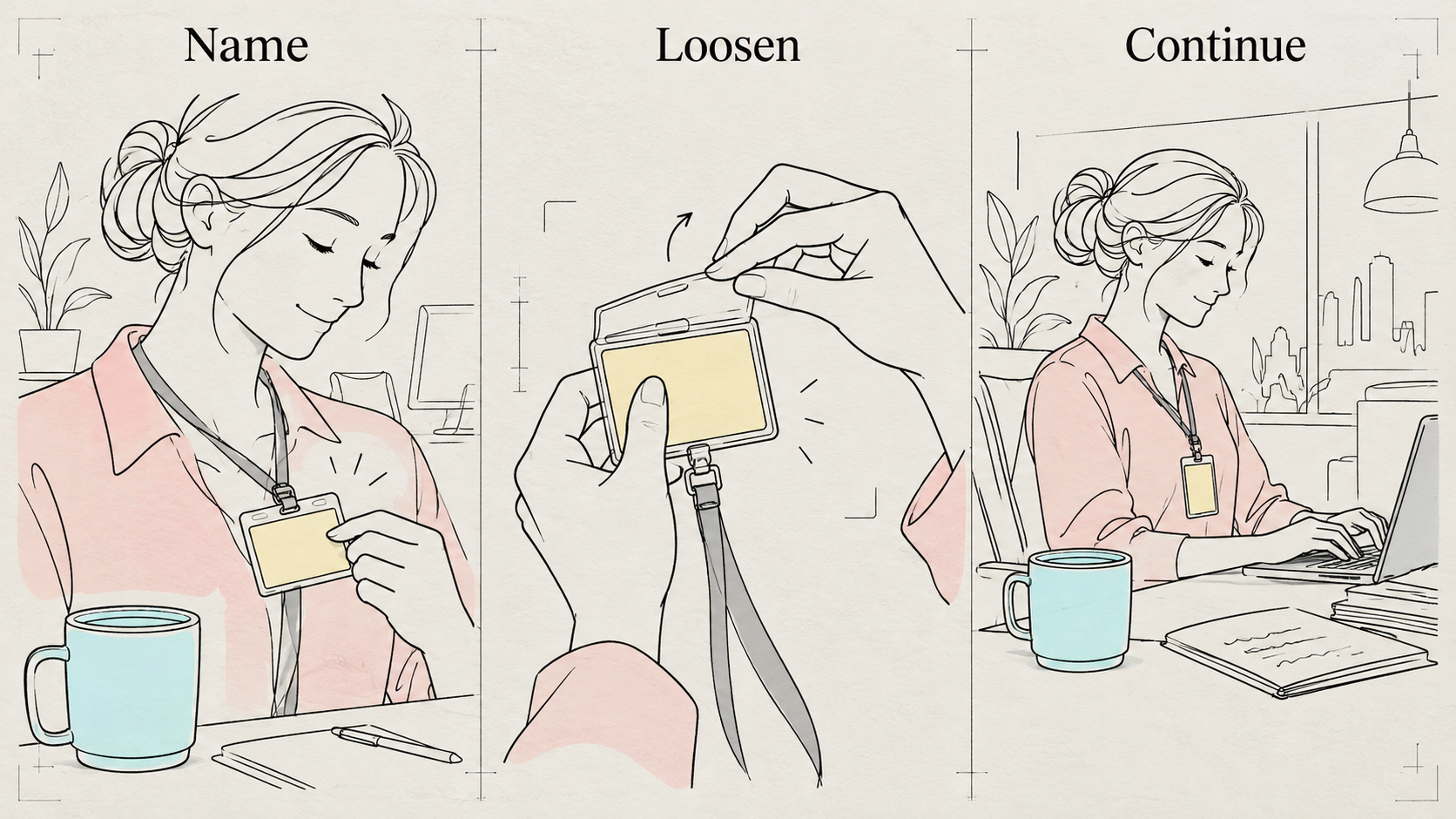
Some passages of the Diamond Sutra name something, deny that it is that thing, and retain the name. The book turns that recurring pattern into a three-part reading method: acknowledge the useful designation, loosen its imagined solidity, and continue using it.
This is an interpretation of the pattern, not a fabricated quotation from the scripture. The third move matters. Without it, denial becomes an excuse to quit. With the label reliable, acknowledge the real commitments; question the imagined permanent substance; then make tomorrow's commitment clear and meet it.
Even a helpful method can become an identity. The sutra's raft analogy makes the teaching itself available for questioning. A tool can help you cross without becoming your permanent foundation. Throwing away useful tools before using them misses the point, too.
AI assistants belong within that same practical boundary. You can ask one to examine a judgment or suggest another framing. Compare the answer with the actual event and available evidence. A reassuring sentence does not settle whether its account of you is true.
An ordinary reflection, with a next action
Choose a small, recent piece of feedback. Write the event specifically: someone said the introduction was unclear; your face felt warm; you reread the comment. On a separate line, write the larger conclusions you added: my work is never good enough; they have discovered I am incompetent.
Do not force yourself to dismiss those conclusions. Ask what evidence each would need. An unclear introduction and permanent incompetence are different claims. Then write one useful next action: ask which part was confusing, rewrite the opening, or request a concrete example. That final action keeps reflection connected to responsibility.
You can also examine one identity you defend. What does it usefully describe? Where does it depend on conditions or have exceptions? What will you still do tomorrow? Observation is the aim, not earning a badge for perfect detachment.
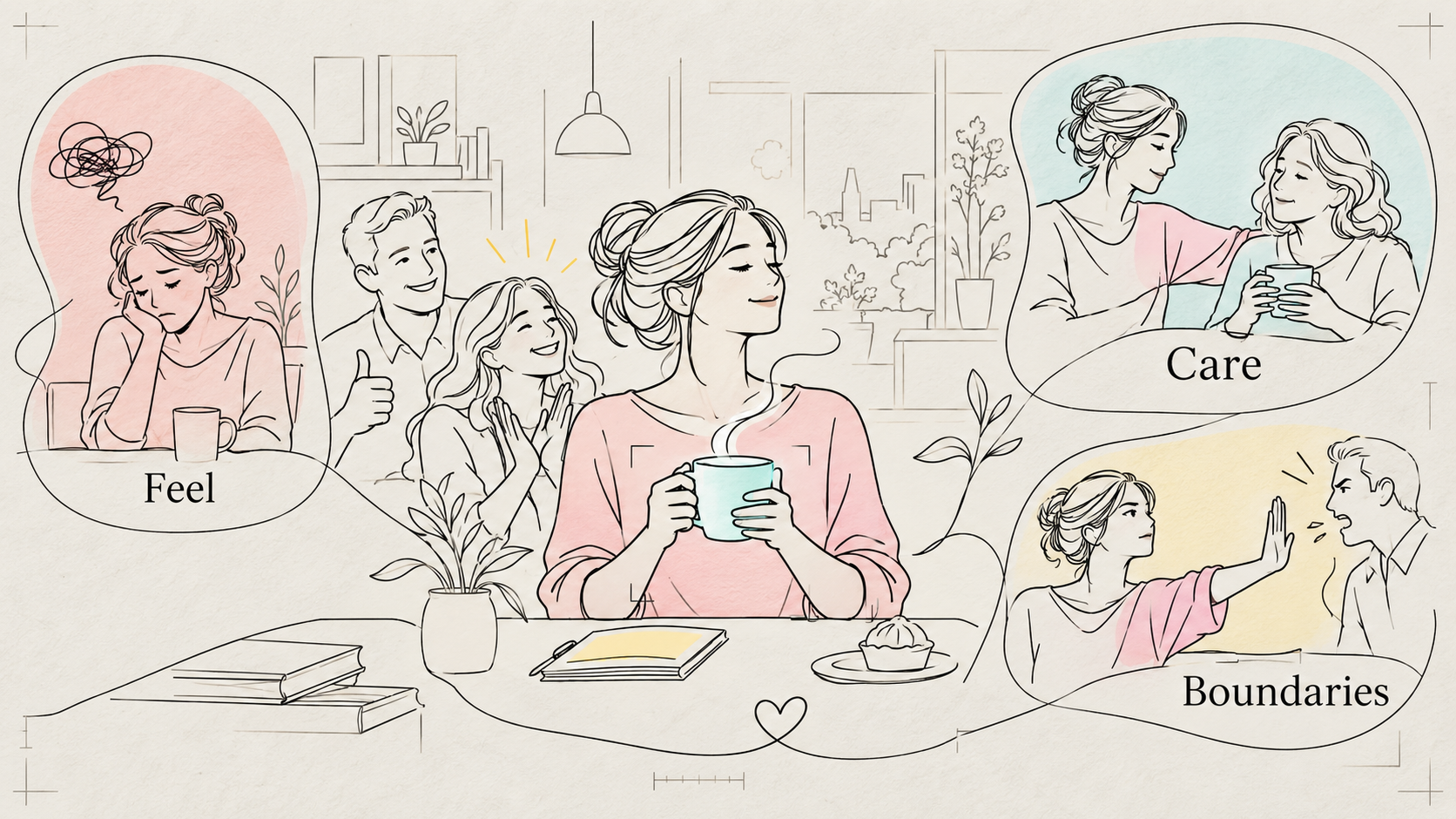
Non-abiding must not become a reason to accept mistreatment. Harm, boundaries, and accountability remain real. The book's comparisons with cognitive science and psychology also have explicit limits: Buddhist liberation and clinical symptoms are different questions. This article makes no claim that neuroscience proves the sutra or that reading a book treats a condition. These are everyday philosophical reflections, not a treatment plan.
The book and the next question

Wuzhu develops this argument across twenty-one chapters, with discussions of the sutra, modern comparisons, and ordinary practices. Readers of Chinese can find the simplified and traditional Chinese editions here. The book is Chinese-only; the English video and this companion provide an introduction for English-speaking readers.
What are you carrying now, and which part of your grip serves the task rather than the identity you want it to confirm?
Sources and reading boundaries
The primary scriptural source is Kumarajiva's Chinese Diamond Sutra, CBETA T08n0235, official TEI text. Relevant passages include the opening and question (748c–749a), giving and four notions (749a–749b), the raft (749b10–11), non-abiding and arising of mind (749c21–23), and examples of the naming pattern (750a–750b).
For English comparison, see the British Library International Dunhuang Programme's translation of the first text panel. This companion paraphrases the text and distinguishes those paraphrases from the modern interpretation in Wuzhu. Publication language and current purchase destination were checked against the official book catalog.
Watch more first-principles field guides on Wiki4What, or read the essays at blog.wiki4what.com.