
The Identity Tax: Three Selves and One Invisible Bill
When your actual, claimed, and perceived selves drift apart, the gap can quietly cost trust, ease, attention, and opportunity.

Chinese version: 中文版
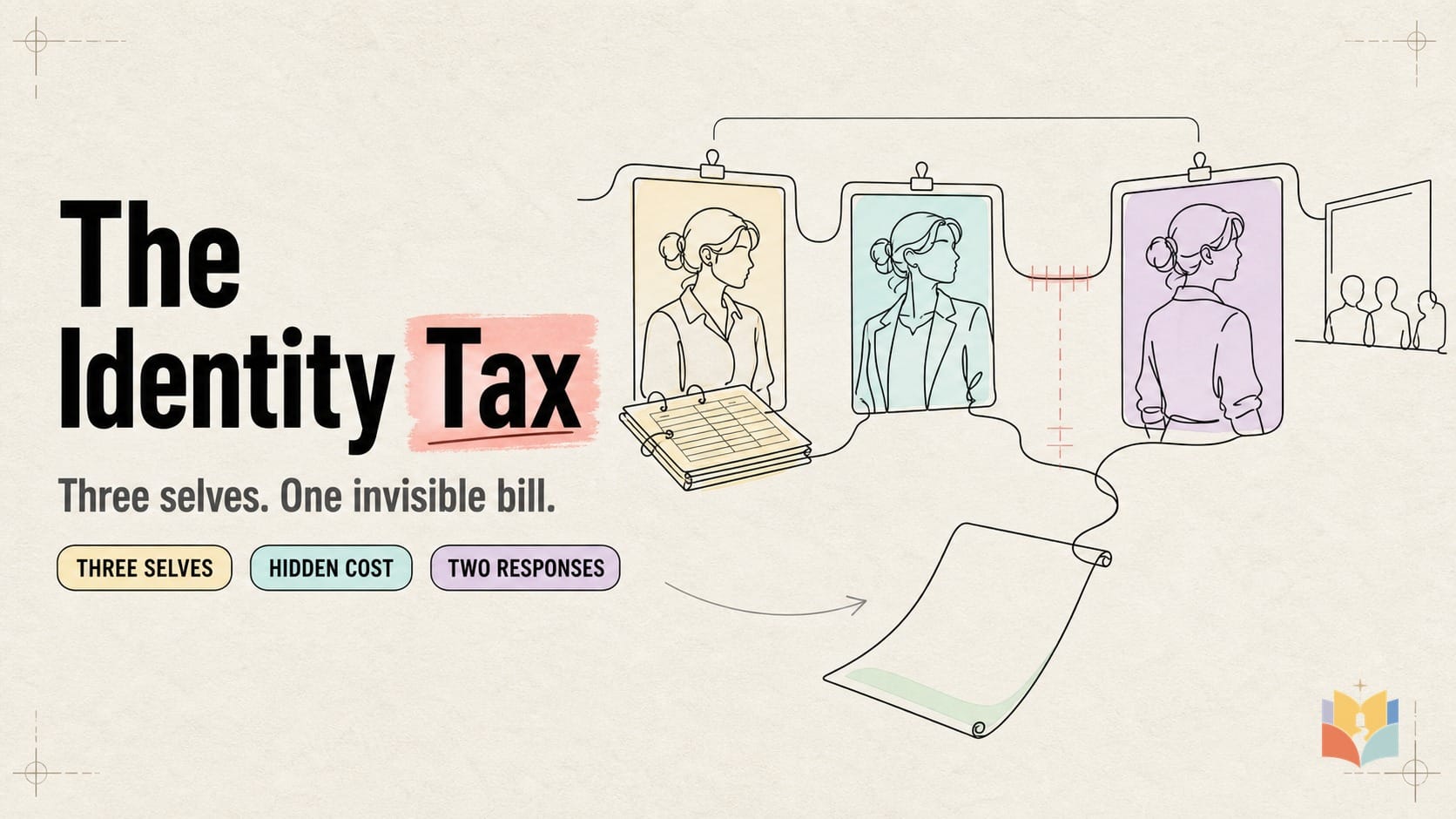
A label can look impressive and still send you an invisible bill. The identity tax is the ongoing cost that may appear when who you are, who you claim to be, and who other people perceive do not line up.
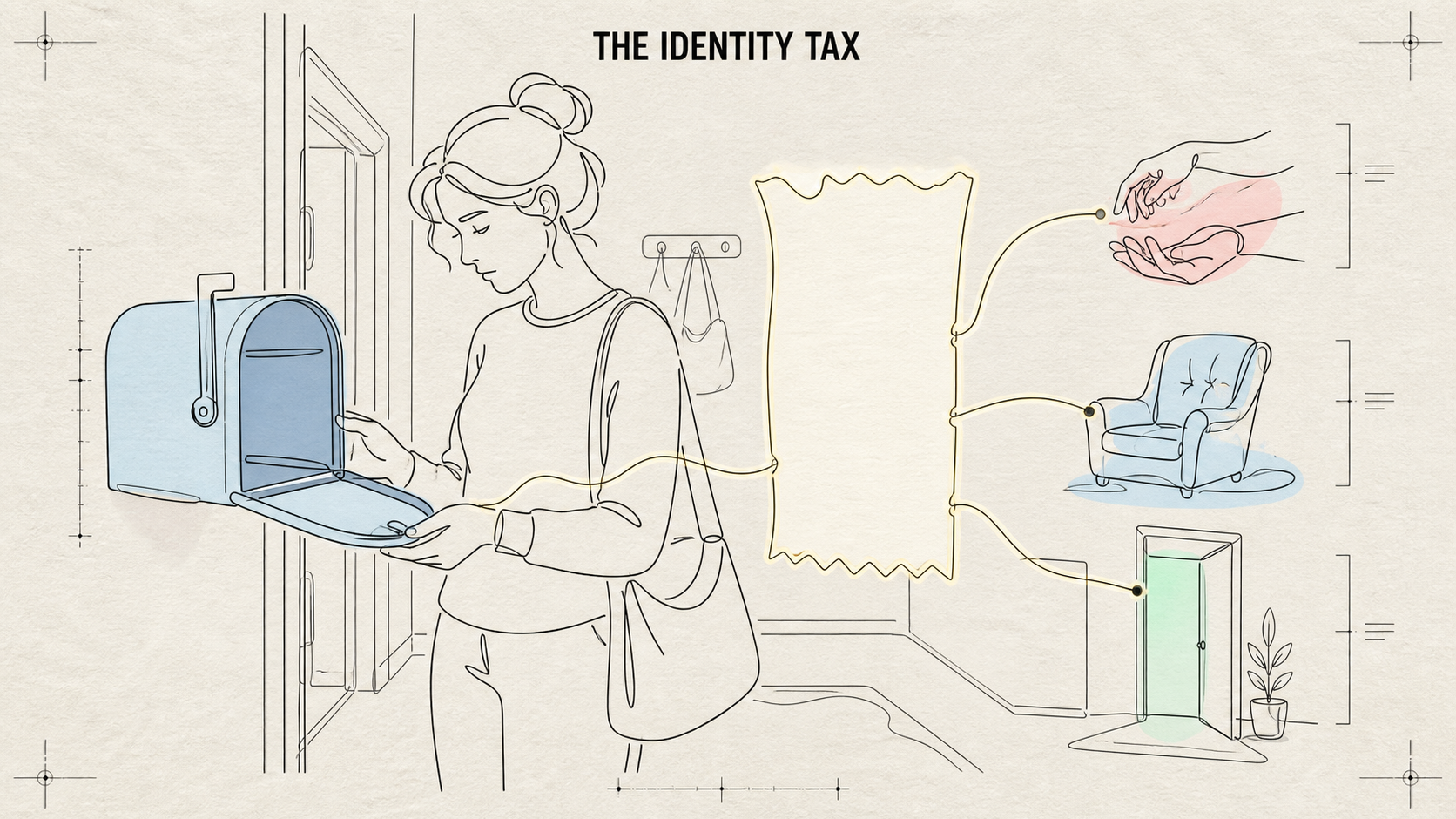
Consider a composite case built from patterns in questions, conversations, and situations I have encountered. The character, workplace, purchases, chronology, and central sentence are constructed. A young employee is competent, punctual, and careful, yet her manager has gone cold. Good assignments move elsewhere. Important conversations happen without her. When she asks whether the problem is her work, she is told everything is fine.
At the center of the case is a sentence that looks like background: her family is wealthy, her salary would not cover one of her handbags, and she took the job because she wanted to prove her worth. None of those facts is a moral failure. But together they reveal three different positions: the one she actually occupies, the one her signals appear to claim, and the one other people assign to her. That gap may cost more than the bag.
The bill no one itemizes
The identity tax is my name for the ongoing, invisible cost of displaying a label that does not match the position you can currently support. The payment is not necessarily money. It may arrive as distrust, extra scrutiny, anxiety, isolation, or missed opportunity.
The tax metaphor matters because the cost rarely arrives with an explanation. A colleague becomes guarded. A friend stops confiding in you. You feel pressure to maintain a performance you no longer enjoy. Because no invoice identifies the charge, it is easy to file each one under bad luck, a difficult room, or a defect in your personality.
Three portraits of the same person
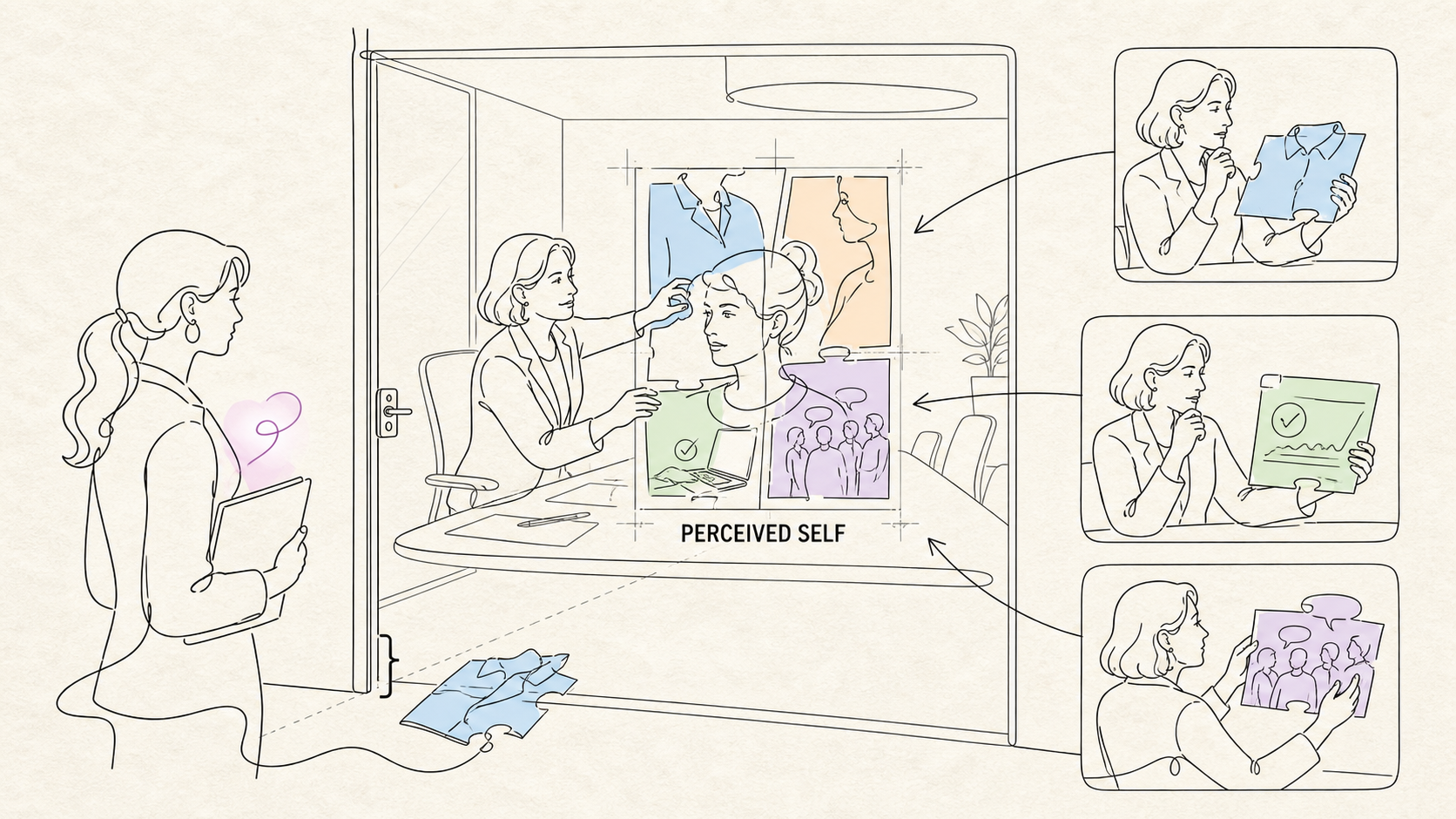
Imagine three portraits of you hanging in three different rooms. The first is the actual self: what you can genuinely do, what you have actually done, and which resources are truly yours. A larger title cannot inflate this portrait, and a stranger's low opinion cannot shrink it. It is the current ledger of reality.
The second is the claimed self: the person you present and hope to receive credit for. Clothes, titles, social feeds, books arranged behind a desk, and stories about how well a company is doing can all help paint it. A claimed self is not automatically dishonest. It can be a sincere statement of direction. Every beginner sometimes wears tomorrow's clothes before they fully fit.
The third is the perceived self: the person other people construct from the fragments they can see. This portrait hangs in rooms you cannot enter. You do not control the brush, but it is the portrait other people act on. A manager cannot interact directly with your private intentions; she interacts with her reading of you.
When the portraits separate, they create a misalignment gap. In this model, that gap is the taxable base. The framework is an author synthesis, not a clinical diagnosis or a validated psychological scale. It has a family resemblance to E. Tory Higgins's self-discrepancy theory, which studies gaps among the actual, ideal, and ought selves, but the two models are not the same. Research on self-verification also suggests that people seek some consistency between their own self-view and how important others see them.
A label does more than sit on you. It can start writing your lines.
The object is not the defendant
Place the same expensive handbag in three different hands: an experienced founder whose record and resources already support the signal; a junior employee with access to family wealth but little track record in that room; and a buyer who financed the bag with debt to project a position she does not occupy. Same object, three possible tax rates.
These are illustrations, not guaranteed social outcomes. The founder may pay almost nothing because the bag adds no unsupported claim. The junior employee may attract resentment or doubt because observers confuse access to resources with a claim about earned standing. The indebted buyer may face both a social or psychological cost and a monthly bill. None of this makes an observer's judgment fair. The point is that the object alone cannot determine the rate; the perceived gap does.
That distinction prevents the idea from becoming a sermon about wealth. An inexpensive label can create a wide gap. An expensive label can create none. The object was never the defendant.
How the gap becomes a loop
A curated life is a claimed self with a publishing schedule. Each perfect trip, productive morning, affectionate dinner, or business milestone may be true. Yet the gallery can create a maintenance problem: once an audience knows the exhibit, every new room may feel expected to match it. The cost can be the low hum of wondering whether the life still supports the feed.
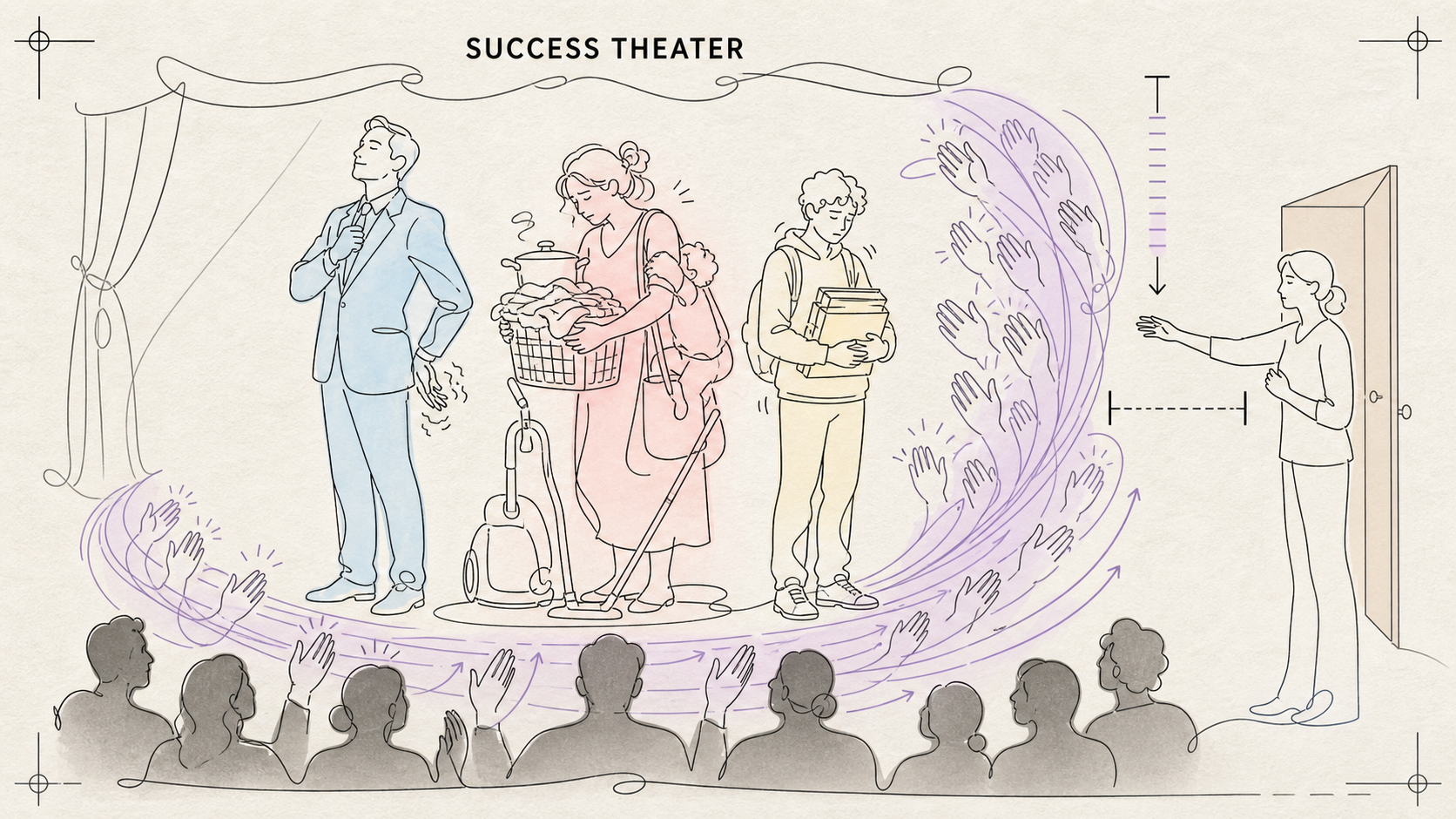
Success theater is the offline version. A founder tells everyone the company is thriving while privately frightened. A parent becomes the one who always has it together. A student becomes the gifted one who never asks for help. A convincing performance can make help less likely to arrive. Even wisdom can become a wardrobe when the language of insight outruns the behavior it is supposed to describe.
Under these performances is the proving trap. An internal question—am I enough?—recruits an external anchor to answer it. A purchase, title, audience, or impressive association becomes evidence for the defense. But if the anchor was needed to prove the case, part of you knows the verdict was never settled. So the next anchor must be larger. The golden shovel becomes more expensive while the hole gets deeper.
The loop can sometimes produce growth. Expectations may pull you toward work you freely choose to earn. The key questions are direction and consent: are you building the real capacity behind a label you value, or scrambling to preserve a role you never consciously chose? One can close the gap. The other merely services it.
Two constructive responses
The book recommends two constructive responses that close the gap defined by this model: retire the label, or grow into it. These are not the only reactions a person can have. People may rationalize, minimize, avoid, compartmentalize, or stay put, and there are times when neither constructive response is appropriate or safe. Those choices are real; they simply do not close this particular gap.
To retire the label, lower the claim until it meets reality. Say, "The project failed." Replace "I run a company" with "I am testing a product." Stop publishing a version of home life that makes honest conversation impossible. This may feel like loss because an audience can revise its portrait of you, but it is one deliberate payment that ends a recurring charge.
To grow into the label, keep the direction and build the evidence. If you want to be a writer, write. If you want to be a reliable operator, solve difficult problems repeatedly and leave a record. Do the work until the title changes from aspiration into description. One response lowers the claim; the other raises reality. Both close the gap.

A possible strategy for the long middle is quiet armor: deliberately under-signaling while the actual self is under construction. This is a strategy hypothesis, not an established intervention. Signaling less may reduce one kind of scrutiny, but it can also reduce recognition or opportunity. It is useful only when real work is happening behind the quiet.
Build a ledger, not a costume
That work accumulates in an identity ledger: the verifiable record of what you have actually done. A problem that stayed solved. A thing you built that still works. A person you helped who would vouch for you after the title disappeared. A skill you can perform under pressure. These entries remain true when a company changes the locks, a platform loses attention, or a room changes its mind.
A costume is issued by an audience and can be taken back by an audience. A ledger records what happened in reality. A title and demonstrated ability often travel together, but remove the institution and see what remains. That remainder is closer to what you own.
The ledger also draws attention to three luxuries no label can replace: time, attention, and health. Maintaining a curated self may consume attention. Keeping success theater sealed may affect sleep, stress, or health. Servicing the proving trap may consume time. These are possible metaphorical pathways, not equations or diagnoses; money, institutions, illness, relationships, and social power may matter more in a particular life.
Audit one room
Choose one room rather than your entire life: a team, a family, a group of friends, or an audience online. Write one sentence for the claimed self in that room. What impression are you trying to create? Then write one sentence for the actual self. What can you support with evidence today? Finally, write the sentence you think someone in that room would use to describe you to a stranger. That last sentence is only a guess at the perceived self, so hold it lightly.
Circle the widest distance among the three. Name the currency it may be costing: trust, ease, attention, company, opportunity, or something else. If it feels appropriate and safe, decide whether the label should be retired or earned. You do not need to complete the response today. You only need to stop calling the meter invisible.
The framework is a question about your own controllable claims, not a theory that excuses unfair treatment or tells other people to hide who they are.
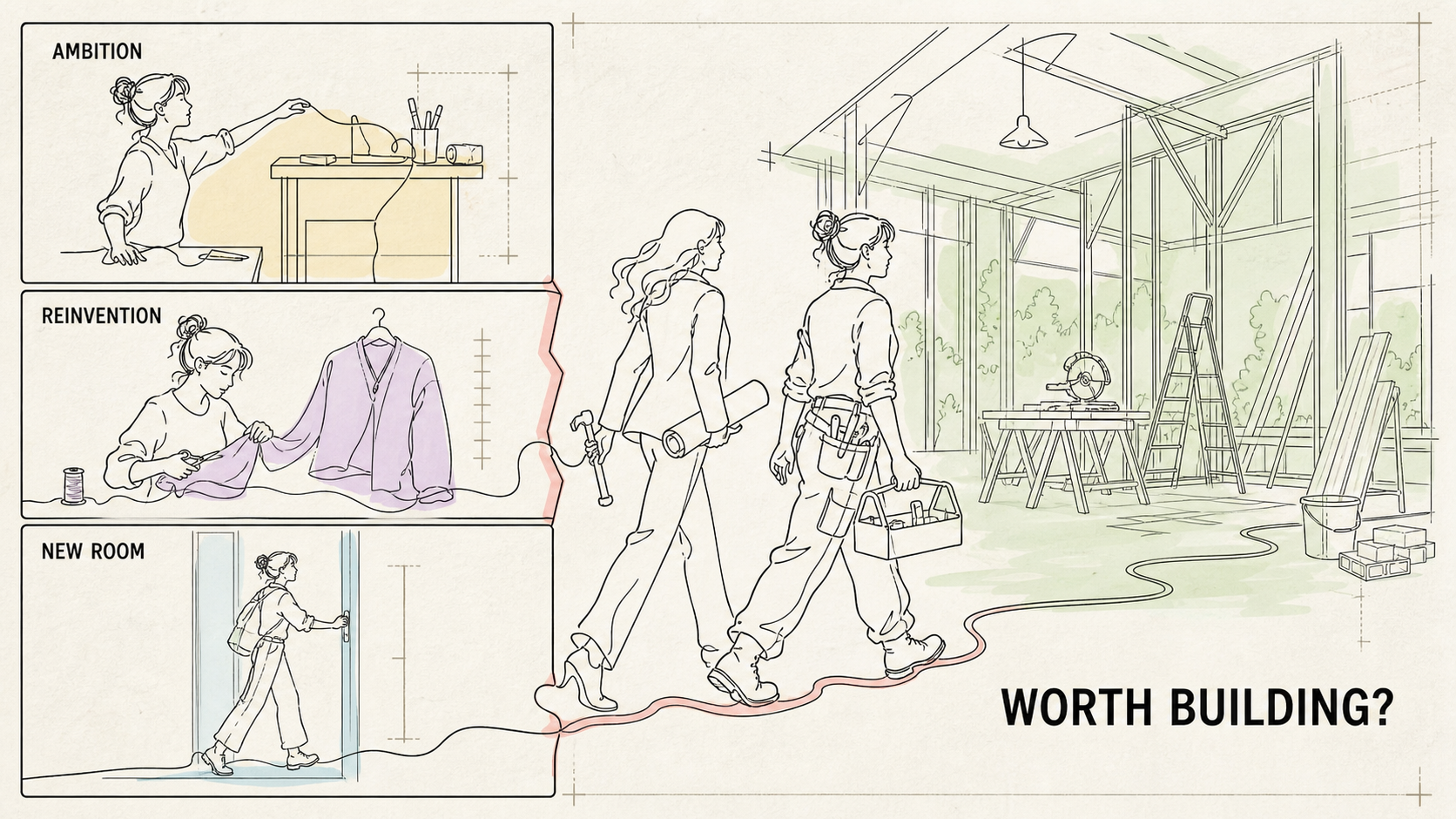
Not every cold manager, lost opportunity, anxious evening, or strained relationship is an identity tax. Power, prejudice, poor leadership, exploitation, and ordinary incompatibility are real. A person who is excluded is not automatically responsible for having sent the wrong signal. There is no moral score attached to the size of a gap: ambition, reinvention, and entering a new room all create gaps. The goal is not perfect transparency or permanent smallness. It is to read a cost that usually arrives without a label and decide whether the future named by your claim is worth building.
For the expanded framework, case studies, and practical exercises, you can learn more or purchase The Identity Tax. The book is a deeper path, not a prerequisite for doing the one-room audit.
Which portrait is doing the talking in the room that matters most right now, and what is it costing the other two?
Watch more first-principles field guides on Wiki4What, or read the essays at blog.wiki4what.com.